
Table of Contents
- Why Moisture Wicking Shirts Sometimes Shrink
- Do Polyester Shirts Shrink? What the Fabric Does Under Heat
- How to Wash Moisture-Wicking Shirts Without Losing Fit
- How to Dry Moisture-Wicking Shirts Safely
- How to Remove Odor From Performance Shirts
- How to Shrink a Moisture Wicking Shirt on Purpose
- Troubleshooting Fit Changes, Stretch, and Seams
- Conclusion
- Frequently Asked Questions
Last Updated: October 19, 2026
Why Moisture Wicking Shirts Sometimes Shrink
Yes, moisture wicking shirts can shrink, and the culprit is almost always heat plus the way the fabric was built. Most performance shirts blend synthetic fibers with a small amount of stretch fiber, and those fibers react to hot water and dryer heat by contracting. The shirt doesn't "melt" or lose its wicking ability. It relaxes and tightens, and the fit you bought slowly disappears.
Here at Fish and Forage, we build our field shirts around that reality. Knowing how the fabric behaves is the difference between a shirt that lasts seasons and one that fits like a different garment by August.
Fiber Composition and Fabric Construction
Fabric composition decides how much a shirt moves. A knit fabric is a looped structure, and loops relax and tighten with heat and moisture. Two shirts can carry the same fiber label and still behave differently because of how tightly they were knit and finished.
- 100% polyester: minimal shrink in cold care, most stable overall
- Polyester/spandex blends: small shrink risk, but stretch memory can fade with high heat
- Cotton blends: the cotton portion is the shrink driver
- Nylon blends: generally stable, though heat can still tighten the knit
The takeaway: check the care label before the fiber list. It tells you what the maker already knows about the fabric.
Do Polyester Shirts Shrink? What the Fabric Does Under Heat
Polyester shirts shrink far less than cotton, but "far less" is not "never." Polyester is a synthetic fiber that resists water absorption, so it doesn't swell and contract the way cotton does. What it does react to is heat. Hot water and a hot dryer can relax the knit and pull the garment in slightly, especially at the seams and shoulders.
Cotton Blends vs. 100% Synthetic
The gap between these two is the whole story.
| Fabric Type | Shrink Risk | Main Cause | Best Care |
|---|---|---|---|
| 100% polyester | Low | Dryer heat | Cold wash, low heat |
| Polyester/spandex | Low to moderate | Heat, stretch loss | Cold wash, air dry |
| 60/40 cotton blend | Moderate | Cotton fiber swelling | Cold wash, tumble low |
| 100% cotton | High | Hot water and heat | Cold wash, air dry |
A cotton blend will always be the riskier bet if fit matters. For field use, a 100% polyester performance shirt like our Backwater Lodge Long Sleeve Shirt holds its shape better because the fabric doesn't absorb water the same way. It's built from lightweight polyester with reinforced shoulder seams, so the structure survives repeated washing.

How to Wash Moisture-Wicking Shirts Without Losing Fit
Wash moisture wicking shirts in cold water on a gentle cycle, skip the fabric softener, and never let them sit wet in the machine. Cold water is the single biggest lever you control. Heat is what shrinks fabric, and cold water removes the sweat without triggering fiber relaxation.
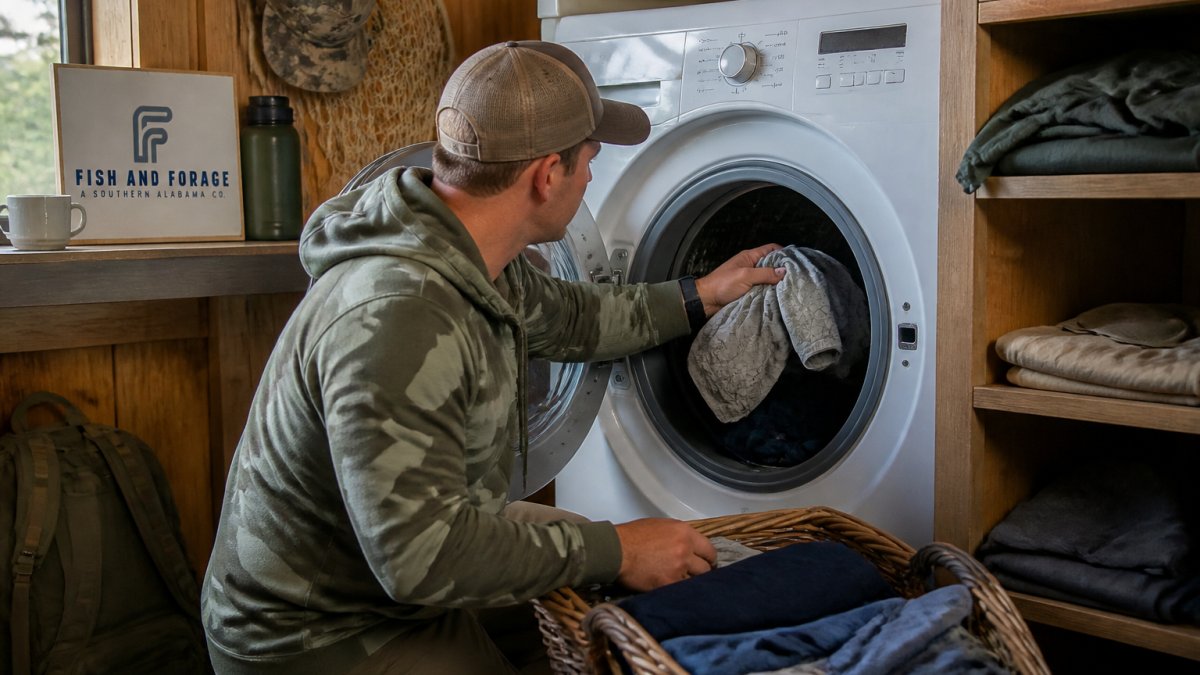
Here's the routine we follow:
- Turn the shirt inside out to protect prints and seams.
- Use cold water and a gentle or normal cycle.
- Add a small amount of mild detergent, nothing with softener in it.
- Skip fabric softener entirely. It leaves residue that clogs fabric pores and kills wicking.
- Pull the shirt out as soon as the cycle ends.
Fabric softener is the quiet killer of performance shirts. The residue coats the fibers and blocks the small openings that move sweat away from your skin. The shirt still fits, but it stops working.
How to Dry Moisture-Wicking Shirts Safely
Air drying is the safest way to dry moisture wicking shirts and the best protection for fit and wicking performance. Hang the shirt on a line or a drying rack in the shade. Air drying avoids the heat that causes shrinkage and keeps the fabric surface intact.
If you need the dryer, use the lowest heat setting and pull the shirt out while it's still slightly damp. High temperatures are what you're avoiding, not the machine itself.
- Best: line dry in shade
- Good: tumble dry low, remove damp
- Avoid: high heat, dryer sheets, overloading
Dryer sheets carry the same residue problem as fabric softener. Skip them on anything you plan to sweat in.
How to Remove Odor From Performance Shirts
Performance shirts hold odor because synthetic fibers trap oils that regular detergent doesn't fully lift. The fix is a deep clean, not more detergent. Wash the shirt in cold water with a half cup of white vinegar added to the rinse cycle. Vinegar breaks down the oil residue that bacteria feed on.
For stubborn smells:
Backwater Lodge Long Sleeve Shirt | Moisture Wicking - Fish and Forage →
- Soak in cold water with a scoop of oxygen-based cleaner for an hour
- Wash normally with mild detergent
- Air dry fully in sunlight when possible
Never use bleach on performance fabric. It weakens the fibers and dulls the color. Our Backwater Lodge shirt is built to resist odor, snag, and stains, which cuts down on how often you need a deep clean in the first place.
How to Shrink a Moisture Wicking Shirt on Purpose
To shrink a moisture wicking shirt on purpose, wash it in warm water and tumble dry on medium heat, checking every ten minutes. The heat relaxes the knit and pulls the garment in. Go slow. You cannot unshrink a shirt once it's gone too far.
- Wash in warm, not hot, water
- Tumble dry on medium, checking often
- Stop the moment the fit feels right
- Expect more movement from cotton blends than pure synthetics
Pure polyester may barely budge. A cotton blend will respond faster. Set your expectations by the fiber content, not by hope.
Troubleshooting Fit Changes, Stretch, and Seams
If a moisture-wicking shirt has already changed size, the first step is figuring out whether it actually shrank or just feels different. Temporary fit changes, from fabric relaxation, elastic wear, or residue buildup, can often be reversed. Permanent shrinkage from fiber contraction or heat damage cannot. Knowing the difference saves you from making a bad situation worse.
Is It Shrinkage or Just Fit Change?
A shirt that shrank will be shorter in the body and sleeves, and the change is usually permanent after the first hot wash and dry. A shirt that feels tighter but hasn't lost length may have fabric distortion from stretch loss, seam puckering, or detergent residue stiffening the fibers. Check the garment against its original measurements if you have them, or compare a washed shirt to an unworn one of the same size. If the length is the same but the chest feels tight, you're likely dealing with stretch recovery issues, not shrinkage.
How to Recover a Shrunk Shirt
You can sometimes recover a little length by washing cold and drying flat, gently stretching the seams while damp. It won't fully reverse shrinkage, but it can ease a tight shoulder or a short hem. Here's the routine:
- Wash the shirt in cold water with mild detergent, no softener.
- While the shirt is still damp, lay it flat on a towel.
- Gently stretch the body and sleeves lengthwise, focusing on the seams and hem.
- Pin or weight the edges to hold shape, and let it air dry completely.
- Repeat once if needed; don't force it.
This works best on cotton blends, where the fibers can relax with moisture. Pure polyester may barely budge. If the shirt has already been through a hot dryer multiple times, the fibers may be permanently set and recovery won't help.
When Heat Damage Is Irreversible
Spandex loses memory with repeated high heat, and once it's gone, the shirt won't snap back. You'll notice baggy knees, stretched-out cuffs, or a collar that won't lie flat. Seams can also distort, puckering or pulling, and prints may crack or peel. If you see these signs, the damage is structural, not just dimensional. No amount of cold washing will fix it. The best move is to retire the shirt for field work and replace it with one that has reinforced seams and a care label you can follow from day one.
Protecting Seams, Prints, and Stretch
- Seams: Reinforced seams hold better, so check them before you buy. Flatlock seams, common in performance shirts, resist chafing and distortion better than standard overlock seams.
- Prints: Heat is the enemy of graphics, so keep the dryer cool. Turn the shirt inside out before washing to reduce abrasion.
- Stretch: Spandex loses memory with repeated high heat. Air dry to preserve elasticity.
- Cling: Static and residue cause cling, so skip softeners and dryer sheets.
A shirt that shrank is usually a shirt that met too much heat. Fix the care routine and the next one lasts.
Conclusion
The honest answer to whether moisture wicking shirts shrink is: less than cotton, but not never. Cold water, low heat, and no fabric softener keep the fit and the wicking performance where you want them. Get the care right and a good shirt earns its place season after season.
At Fish and Forage, we build apparel for the field and the everyday, with moisture-wicking fabric and reinforced construction that holds up to real use. Our Backwater Lodge Long Sleeve Shirt pairs lightweight polyester with UPF 44+ coverage and odor resistance for long days on the water or in the woods. Browse the full collection and gear up for the season.
Frequently Asked Questions
Do moisture-wicking shirts shrink in the wash?
Most moisture-wicking shirts are made from polyester or synthetic blends that resist shrinking in cold or warm water. Hot water above 140°F can cause synthetic fibers to relax and the fabric to tighten slightly. Cotton-rich blends are more prone to shrinking because cotton fibers swell and contract when heated. Washing in cold water and skipping the high-heat dryer cycle keeps most performance shirts true to size.
Do polyester moisture-wicking shirts shrink in the dryer?
Polyester shirts can shrink in a hot dryer, though usually less than cotton. High heat relaxes the fiber structure and can cause the knit to contract, especially in lower-quality garments. Use the lowest heat setting or air-dry your performance shirts. If you must use a dryer, remove the shirt while it is still slightly damp and hang it to finish drying, which limits heat exposure and helps preserve the wicking finish.
How do you wash moisture-wicking shirts without shrinking them?
Turn the shirt inside out, use cold water on a gentle cycle, and add a small amount of mild detergent. Avoid fabric softener and bleach, which leave residue that blocks wicking. Skip the high-spin cycle to reduce stress on the knit. Hang or lay flat to dry. Following the care label and washing like items together keeps the fabric performing and the fit consistent wash after wash.
Can you shrink a moisture-wicking shirt if it is too big?
You can shrink a moisture-wicking shirt slightly by washing it in warm water and tumble-drying on low heat, but results are limited and uneven. Synthetic fabrics may tighten a little, while seams and prints can distort. Check the care label first. If the shirt is only a bit loose, a warm wash and low dryer cycle may help. For a significantly oversized shirt, tailoring is a more reliable option than repeated heat exposure.