
Table of Contents
- Why Performance Gear Needs Special Care
- What You'll Need Before You Start
- How to Wash Performance Gear: Step-by-Step
- How to Clean Moisture-Wicking Fishing Shirts
- How to Remove Odor From Athletic Clothes
- Best Detergent for Moisture-Wicking Clothes
- How to Dry Performance Clothing Without Damage
- Common Mistakes That Ruin Performance Fabrics
- Frequently Asked Questions
Last Updated: October 12, 2026
Why Performance Gear Needs Special Care
Performance gear is built with technical fabrics that pull sweat away from your skin, and those fabrics need different handling than a cotton t-shirt. At Fish and Forage, we build moisture-wicking apparel for long days on the water and in the field, so we know how fast the wrong wash cycle can break down a good shirt.

The core problem: sweat, body oils, and bacteria work into synthetic fibers, and regular detergent and hot water leave residue behind. That residue traps odor and blocks the fabric from doing its job.
Cotton can take a beating; performance fabrics cannot. Treat them differently and they last seasons instead of months.
What You'll Need Before You Start
Gather these basics first:
- A mesh laundry bag for small items and zippers
- Sports detergent or a mild liquid detergent, free of dyes and perfumes
- White vinegar for odor removal
- A front-loading or high-efficiency washing machine if you have one
- A drying rack or a clothesline
Skip fabric softener and bleach entirely. Both coat or eat away at performance fabrics.
Check the care label on every garment first for the maker's recommended water temperature and cycle.
How to Wash Performance Gear: Step-by-Step
Washing performance gear comes down to three moves: act fast after a workout, pre-treat problem spots, then wash cold on a gentle cycle. Get those right and most odor problems never start.
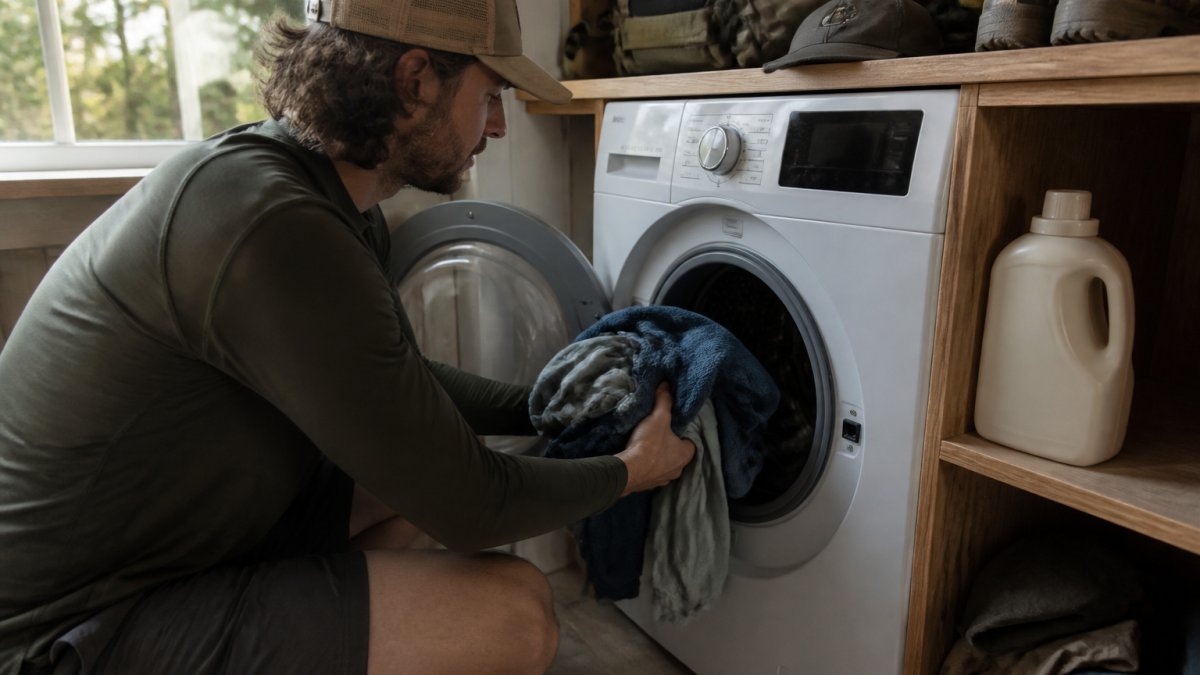
Step 1: Handle Sweaty Clothes Right After Your Workout
Do not let sweaty clothes sit in a gym bag or hamper, bacteria multiply fast in damp fabric, causing persistent odor.
- Rinse the garment in cool water, or hang it to dry before it goes in the hamper
- Turn shirts inside out so the sweaty side faces out
- Keep activewear in a separate laundry pile from towels and everyday cotton
A quick rinse takes ten seconds and saves a fight with odor later.
Step 2: Pre-Treat Stubborn Odor and Stains
Mix one part white vinegar with four parts cold water. Soak the garment for 15 to 30 minutes.
For heavy underarm sweat stains, dab detergent directly on the spot and let it sit ten minutes before washing.
Vinegar breaks down odor-trapping residue and softens fabric without the coating fabric softener leaves behind.
Step 3: Wash on a Delicate Cycle With Cold Water
Use cold water on a delicate cycle. Cold protects elasticity and color, while a gentle cycle cuts the friction that wears out thin performance fabrics.
- Use the amount of detergent the label recommends, not more
- Add half a cup of white vinegar to the rinse cycle for extra odor removal
- Wash similar fabrics together, and skip the overload
Too much detergent leaves detergent residue in the fibers, which holds odor and makes fabric feel stiff.
Step 4: Adjust the Routine to the Fabric
Most guides treat all activewear the same. It is not.
Nylon. Nylon is strong and abrasion-resistant but yellows and weakens with heat and chlorine bleach.
Elastane / spandex (the stretch in almost every legging and compression piece). Elastane is the most heat-sensitive fiber in your drawer.
Waterproof and coated gear (rain shells, windbreakers, DWR-treated jackets). These are the pieces most people ruin.
A quick rule for the whole load: when in doubt, go colder, gentler, and shorter.
How to Clean Moisture-Wicking Fishing Shirts
Fishing shirts pick up more than sweat, saltwater, fish slime, and sunscreen all work into the fabric. Rinse in cool water as soon as you are off the water, then follow the same cold-water, gentle-cycle routine.
For saltwater exposure, let the shirt sit in cool water for 20 minutes before washing to lift salt out of the fibers.
Backwater Lodge Long Sleeve Shirt | Moisture Wicking - Fish and Forage →
Our Backwater Lodge Long Sleeve Shirt is built from 100% lightweight polyester with UPF 44+ protection, and it is snag, fade, stain and odor resistant.

How to Remove Odor From Athletic Clothes
Persistent odor that survives a normal wash usually means bacteria are trapped deep in the fabric. The fix is a vinegar soak, not more detergent.
Soak the garment in one part white vinegar to four parts cold water for 30 minutes, then wash as usual on a cold, delicate cycle. The acid breaks down the odor-causing residue regular detergent leaves behind.
If odor still lingers, repeat the soak. Do not reach for bleach. Bleach damages performance fabrics and can set some stains permanently.
| Problem | Fix | Why It Works |
|---|---|---|
| Light sweat smell | Cold wash after each wear | Stops bacteria before it settles |
| Set-in odor | 30-minute vinegar soak, then wash | Breaks down trapped residue |
| Saltwater and slime | Cool rinse right after use | Lifts salt before it dries in |
| Stiff, coated fabric | Skip fabric softener, use vinegar | Removes buildup, restores feel |
Best Detergent for Moisture-Wicking Clothes
The best detergent for moisture-wicking clothes is a sports detergent or mild liquid formula with no dyes, perfumes, or fabric softener. These clean without leaving the residue that clogs wicking fibers.
What to look for:
- Free of dyes and perfumes to avoid irritation and buildup
- Formulated for synthetic fabrics and technical gear
- HE-compatible if you use a high-efficiency machine
What to avoid: fabric softener, bleach, and pods that leave undissolved film. Softener is the biggest offender. It coats the fabric and kills moisture-wicking performance over time.
How to Dry Performance Clothing Without Damage
Drying is where a lot of correctly washed gear still gets ruined. Heat relaxes elastane so leggings lose their snap, shrinks or warps synthetics, and degrades the DWR coating on shells. The good news: drying is the easiest step to get right once you know which fabrics can take heat and which cannot.
Air Drying: The Default for Almost Everything
Air-dry performance clothing whenever you can. It costs nothing, adds no heat damage, and preserves elasticity and coatings better than any dryer setting.
- Lay knit tops and leggings flat on a drying rack so they keep their shape instead of stretching on a line.
- Hang shells, jackets, and heavier pieces by the shoulders or hood.
- Keep gear out of direct sun for long stretches. UV light fades dyes and, over time, can degrade elastane and coatings just like heat does. A shaded rack or an indoor line is ideal.
- Reshape garments while damp. Smooth out collars, cuffs, and seams so they dry without creases you would otherwise iron out, and never iron performance fabric directly.
Most thin synthetics air-dry in a few hours. Merino takes longer and should be laid flat so it does not stretch under its own weight.
When Tumble Drying Is Safe
Tumble drying is not automatically wrong, heat and duration cause damage, not the tumbling. It is safe when:
- The care label says tumble dry (many manufacturers allow it on low).
- You use the lowest heat setting available, or a no-heat "air fluff" / "tumble" cycle if your machine has one.
- You pull items out slightly damp rather than running them to bone-dry. A little residual moisture lets the last bit evaporate on the rack and reduces heat exposure.
- You do not overload the drum, so air can circulate and items dry evenly instead of sitting in a hot, packed load.
People reach for the dryer on high because it is faster, but high heat is the fastest way to ruin a shirt you just washed correctly, it sets odor, breaks down stretch, and strips coatings.
The One Case Where a Little Heat Helps: Reactivating DWR
Waterproof and water-resistant shells are the exception to the "no heat" rule. The durable water repellent (DWR) finish that makes water bead up can stop working after a few washes, and some manufacturers recommend a low tumble dry to reactivate it, gentle heat helps the DWR molecules reorient so water beads again. This only applies if the care label says so. If it does, tumble on low, then check whether water still beads; if not, the finish may need a spray-on or wash-in DWR treatment.
What Never Goes in the Dryer
- Compression wear and high-elastane leggings, heat relaxes the fibers and kills the fit.
- Merino wool, heat and tumbling cause shrinkage and felting.
- Waterproof-breathable shells, unless the label explicitly allows low tumble, air-dry them.
- Anything with glued seams, bonded panels, or heat-transfer logos, heat can lift the adhesive.
A Simple Drying Decision
If the care label says air-dry, air-dry. If it allows tumble drying, use the lowest heat and pull items out slightly damp. If it is a waterproof shell and the label calls for it, a low tumble can restore the DWR, never on high. Everything else, especially stretch and wool, dries best on a rack.
Common Mistakes That Ruin Performance Fabrics
Most ruined performance gear fails for the same handful of reasons. Avoid these and your gear outlasts the season.
- Using fabric softener, which coats fibers and blocks wicking
- Washing in hot water, which damages elasticity and sets odor
- Overloading the washer, which traps dirt and detergent
- Letting sweaty clothes sit before washing
- Using bleach on synthetic fabrics
- Tumble drying on high heat
Treat your gear like the technical equipment it is, and it will keep performing. For apparel built to handle the field and the wash cycle, explore our moisture-wicking collection at Fish and Forage.
Frequently Asked Questions
How do you get sweat odor out of performance gear?
Soak the garment in a mix of one cup of white vinegar and cold water for 30 minutes before washing. The vinegar breaks down odor-causing bacteria that regular detergent leaves behind. Then wash on a delicate cycle with a sports detergent and cold water. For persistent odor, add half a cup of baking soda to the wash cycle. Avoid hot water and fabric softener, which can trap bacteria in synthetic fibers and make the smell worse over time.
Should you turn moisture-wicking clothes inside out before washing?
Yes. Turning performance gear inside out protects the outer surface from abrasion and pilling during the wash cycle. It also exposes the interior fabric, where body oils and sweat accumulate, directly to the detergent and water. This simple step helps preserve the moisture-wicking finish and extends the life of your gear. It is especially important for fishing shirts with printed graphics or logos, as it prevents the print from cracking or fading.
Can you use fabric softener on moisture-wicking clothes?
No. Fabric softener coats synthetic fibers with a waxy film that blocks the moisture-wicking properties you paid for. Over time, the fabric stops pulling sweat away from your skin and starts holding odor. Skip softener entirely and use a sports-specific detergent instead. If you want softer fabric, add half a cup of white vinegar to the rinse cycle. It naturally softens without leaving residue and helps strip lingering detergent buildup from previous washes.
Can performance gear go in the dryer?
Most performance gear can go in the dryer on low heat or tumble dry low, but air-drying is safer for long-term fabric health. High heat damages elasticity, breaks down moisture-wicking treatments, and can cause shrinkage. If you use a dryer, choose the lowest heat setting and remove items while slightly damp. Hang them to finish drying. Always check the care label first, because some delicate performance fabrics should never see the inside of a dryer.
Washing performance gear correctly takes a few extra minutes, but it protects the fabric you paid for. At Fish and Forage, our moisture-wicking shirts are made for the outdoors and built to last through repeated cold washes. Our apparel features odor-resistant fabric, UPF 44+ sun protection, and a comfortable fit for everyday wear. Continue shopping with Fish and Forage and gear that holds up season after season.